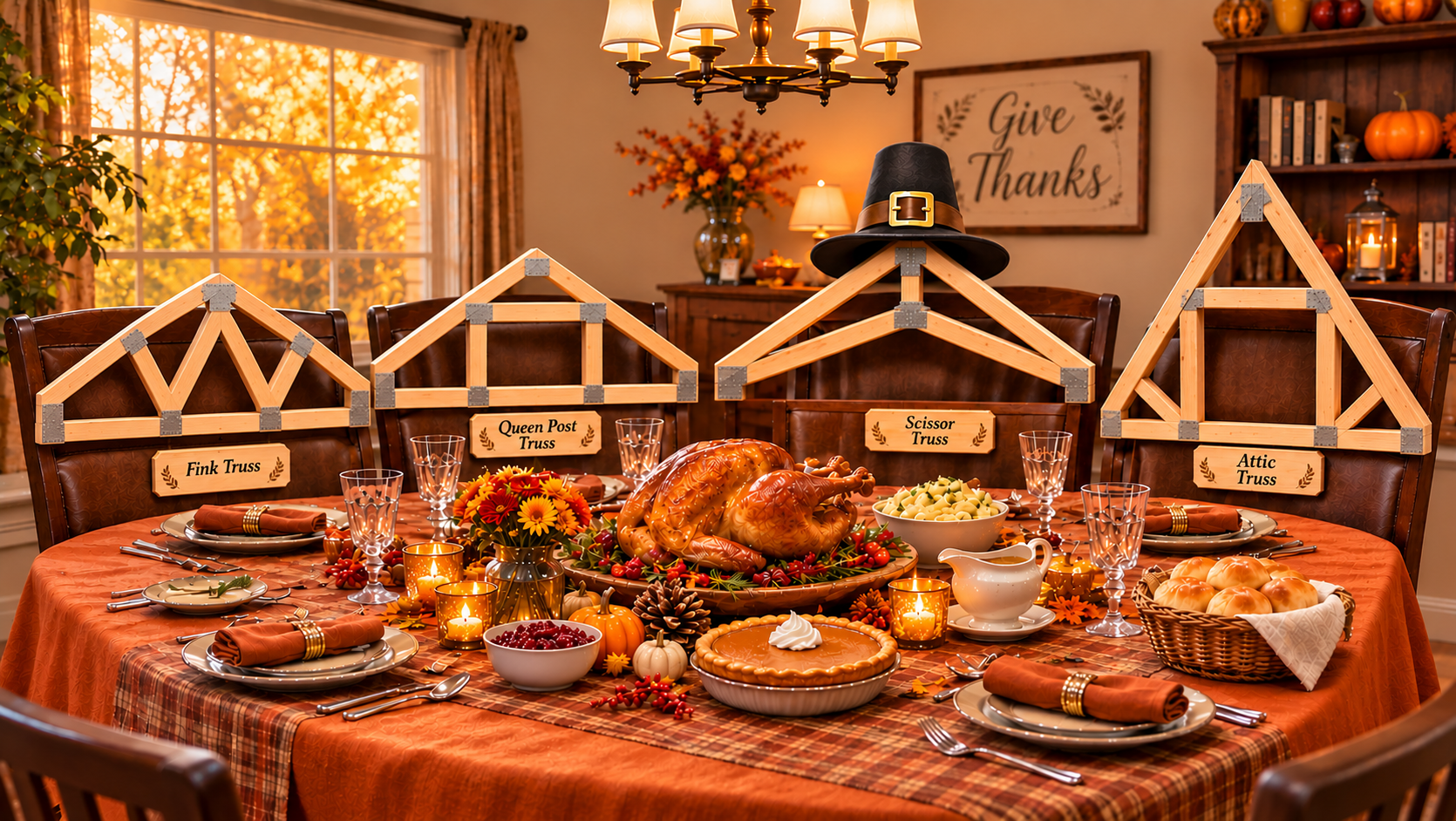
Every group has someone who does most of the work while everyone else takes credit at the holiday table, and in the truss world, that's the…
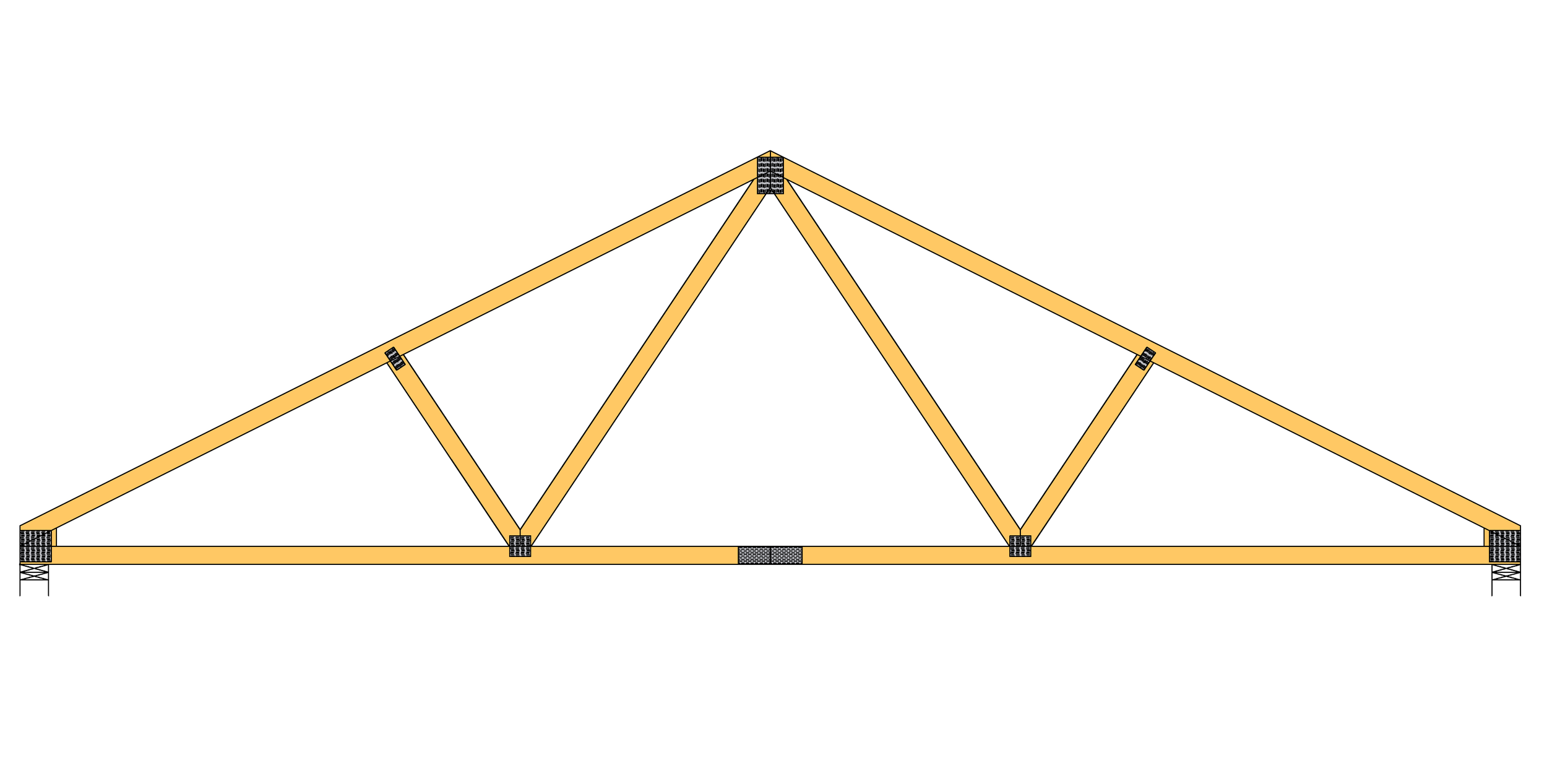
…Fink. Named after a nineteenth-century engineer and instantly recognizable by its W-shaped web pattern, the Fink truss shows up on more residential roofs than any other design. It's efficient, cost-effective, and handles a standard gable roof without needing anything fancy, which is corporate speak for showing up early, doing the job, and never once asking for a raise.
Then there's the Queen Post, the pragmatic cousin who brings a store-bought hotdish (not casserole cause we are midwestern here), repacks it in their own Tupperware, and makes no apologies for it. With just two vertical webs holding things together, it's a simple design best suited to shorter spans, like garages or smaller additions. It won't win any awards for complexity, but very few have ever had a Queen Post truss let them down at three in the morning either.
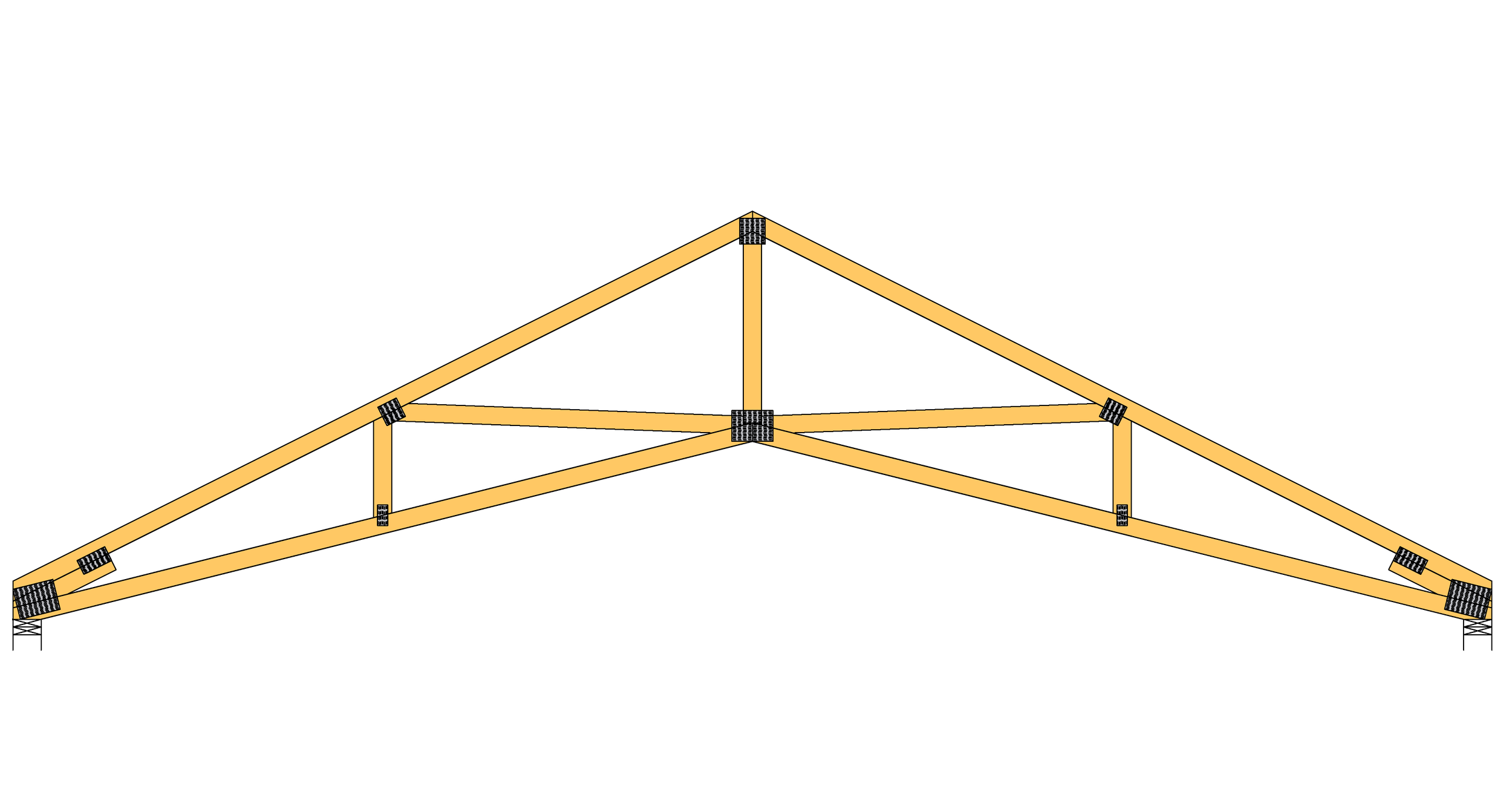
The Scissor truss is the dramatic one at every gathering, the one who shows up wearing a pilgrim hat for absolutely no reason. Instead of a flat bottom chord, it slopes upward too, creating that vaulted, cathedral-ceiling look people pay extra for. It requires more engineering attention than a standard truss, since the geometry is pulling double duty, supporting the roof and shaping the ceiling below it at the same time. Worth it for the right room; exhausting, and budget destroying if you didn't actually need the drama.
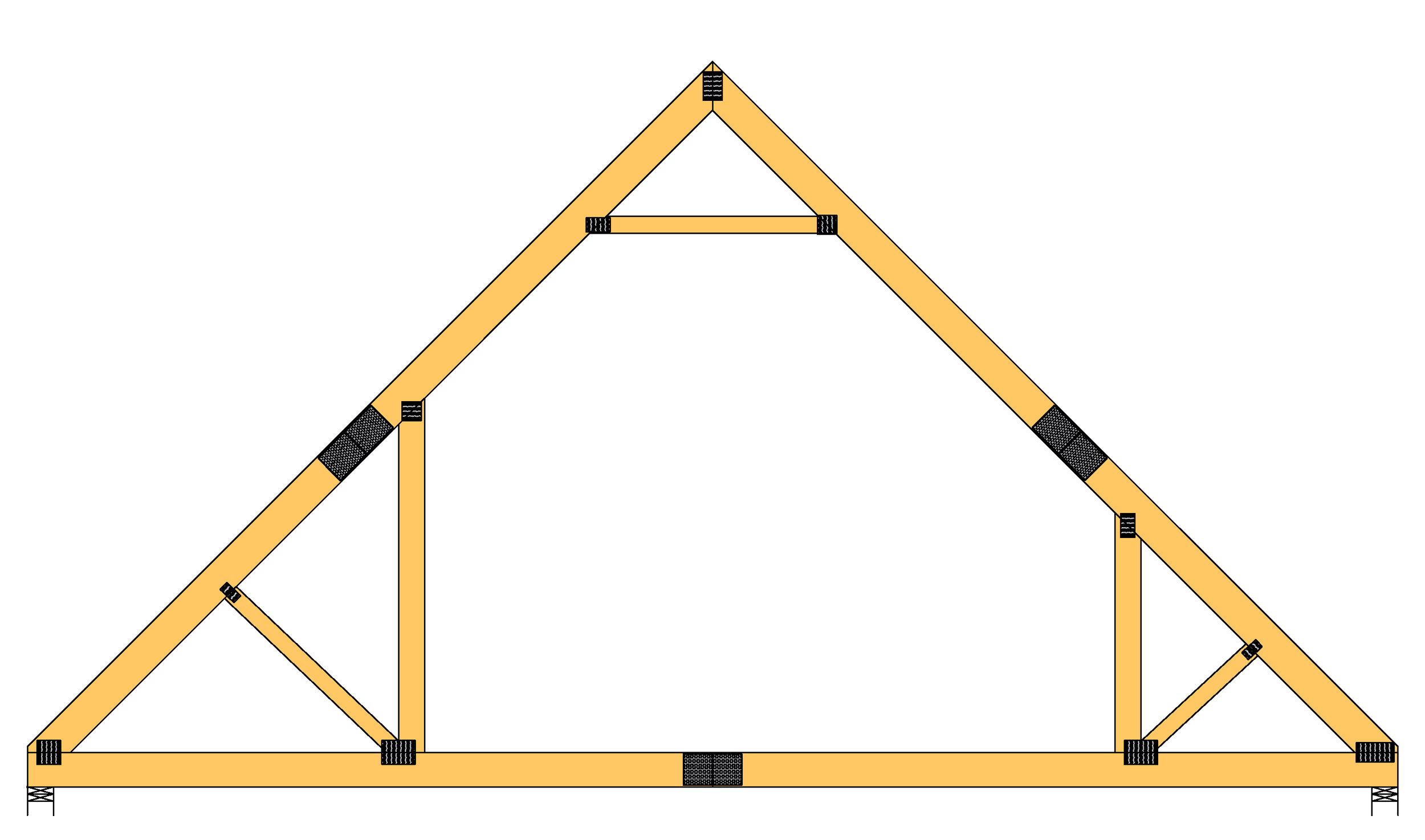
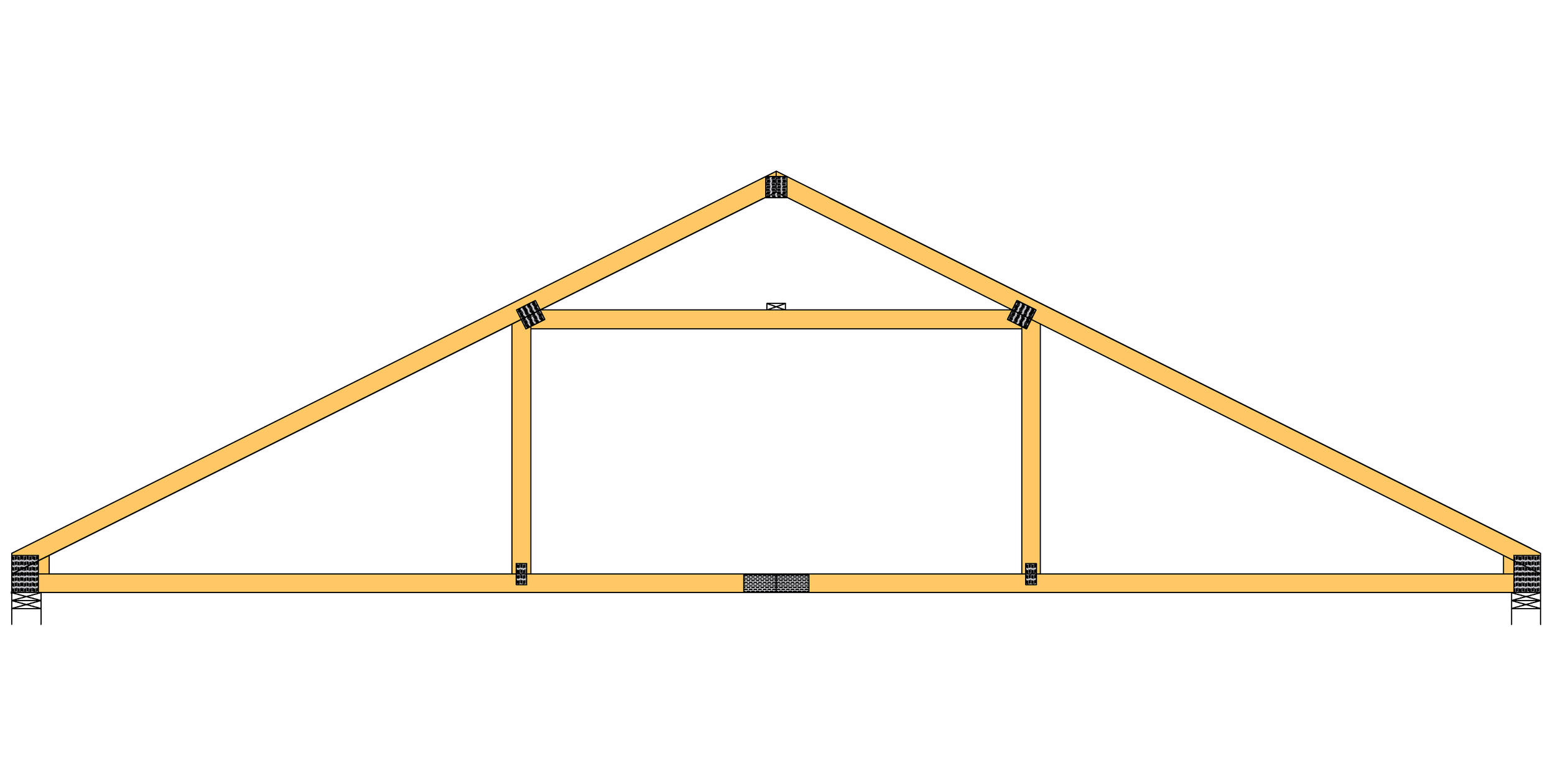
Don't forget the Attic truss, the family member who's quietly been storing everyone's holiday decorations, six broken lamps, every failed hobby you never want to talk about again, and a box labeled simply "cables" for years without complaint. Designed and built with extra open space between the bottom chord and the roof, it turns unused overhead space into something people can actually walk into and use, whether that's storage or a finished bonus room that leaves everyone envying your amazing sewing room.
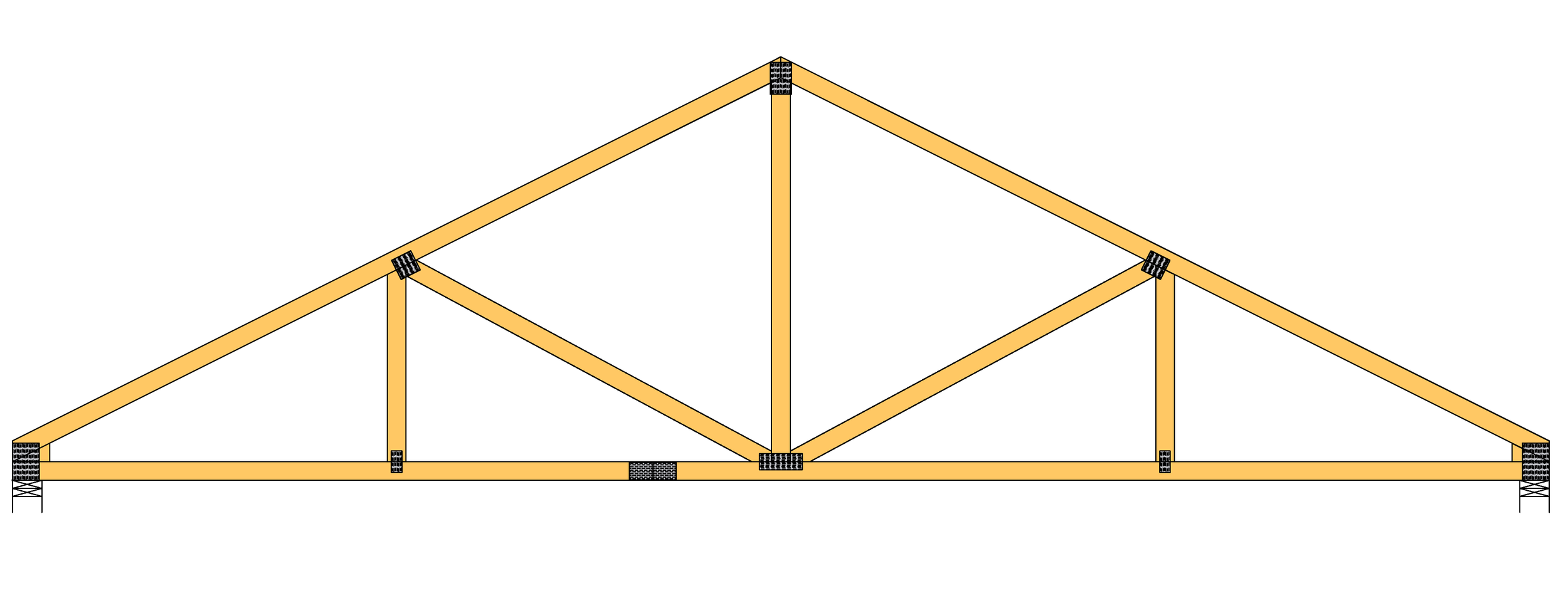
And at the far end of the table sits the Howe truss, the great-uncle with the diagonal webs running between its vertical webs and strong opinions nobody asked for. Less common in modern residential work, but still useful for certain spans, loading and girder, especially in older commercial structures being renovated rather than rebuilt from scratch.
The point of knowing this family tree isn't trivia for its own sake. Each design solves a different problem, and picking the wrong one for the job is a bit like bringing the Queen Post's easygoing simplicity to a job that really needed the Scissor truss's dramatic flair. It might technically fit under the same roof, but it is not going to do what you actually needed it to do; everyone will know it, and silently judge you, similar to most family gatherings.
Fargo Truss Systems designs and manufactures engineered roof and floor trusses for residential and commercial projects across the region. These posts are informational only. No liability is assumed by poster, or any party associated with the poster or writer of this blog post.